




Table of Contents
ToggleA dishwasher is one of those appliances that quietly does its job day after day, until it doesn’t. If your dishes aren’t coming out as clean as they should, or if there’s standing water pooling at the bottom, the culprit is often hiding right in front of you: a clogged filter. Knowing how to clean your dishwasher filter takes less than 15 minutes and can restore performance without calling a repair technician. This guide walks you through the process step-by-step, covering everything from safely removing the filter to troubleshooting common issues.
Key Takeaways
- A clean dishwasher filter takes less than 15 minutes to clean and directly improves washing performance and extends your appliance’s lifespan.
- Most households should clean their dishwasher filter weekly using just a soft brush, warm water, and dish soap—no special tools required.
- Soaking your filter in equal parts white vinegar and warm water for 15 minutes effectively breaks down grease and mineral deposits without harsh chemicals.
- Standing water, foul odors, or longer cycle times indicate a clogged filter that needs immediate cleaning.
- If dishes remain dirty after cleaning the filter, check the spray arm nozzles for clogs, as food particles often block them independently.
Why Your Dishwasher Filter Matters
The dishwasher filter is your machine’s first line of defense against food particles, grease, and debris. Over time, it traps everything that would otherwise clog your spray arms or drain line. A clean dishwasher filter isn’t just about appearance, it directly affects how well your dishes get cleaned and how long your dishwasher runs efficiently.
When the filter gets loaded with gunk, water can’t flow properly through the wash cycle. This means your dishwasher takes longer to complete a cycle and may not clean heavily soiled items effectively. A clogged filter also forces the machine to work harder, which increases wear on the motor and pump. Regular filter cleaning extends your dishwasher’s lifespan and keeps water flowing smoothly throughout every cycle.
Most manufacturers recommend cleaning the filter at least weekly, though households with heavy use (lots of greasy cookware or large families) may need to clean it more often. A simple maintenance habit prevents bigger problems down the road.
What You’ll Need To Get Started
Good news: you don’t need special tools or expensive products. Most of what you already have at home will work perfectly.
Materials and Tools:
• Soft-bristle brush (an old toothbrush works great)
• Warm water
• Dish soap or kitchen degreaser
• Clean dishcloths or paper towels
• White vinegar (optional but highly effective)
• Small bowl or sink
• Soft sponge
That’s truly it. You won’t need goggles, gloves, or protective equipment for this task, it’s safe and straightforward. If you’re using vinegar as part of cleaning your dishwasher with vinegar, have a spray bottle handy. Some people prefer using a diy dishwasher detergent solution made from vinegar and baking soda, which works just as well and uses ingredients you likely have in your kitchen.
Step-By-Step Cleaning Instructions
Removing The Filter Safely
Start by running your dishwasher empty or waiting until it’s completely cool if you’ve just finished a cycle. The filter area is accessible from the bottom of the machine, usually located underneath the bottom spray arm.
Locate your filter assembly, consult your owner’s manual if you’re unsure, but most are obvious once you open the door and look down. Filters typically have a cylindrical or basket shape and may be held in place by a simple twist-lock or clip. Gently twist or release the locking mechanism (usually clockwise) and pull the filter straight up. Don’t force it: if it feels stuck, you’ve likely grabbed the wrong component or it needs the lock released first.
Once removed, inspect the filter in good light. You’ll probably see bits of food, grease buildup, and maybe some slime. This is completely normal and exactly why you’re cleaning it.
Rinsing and Scrubbing Techniques
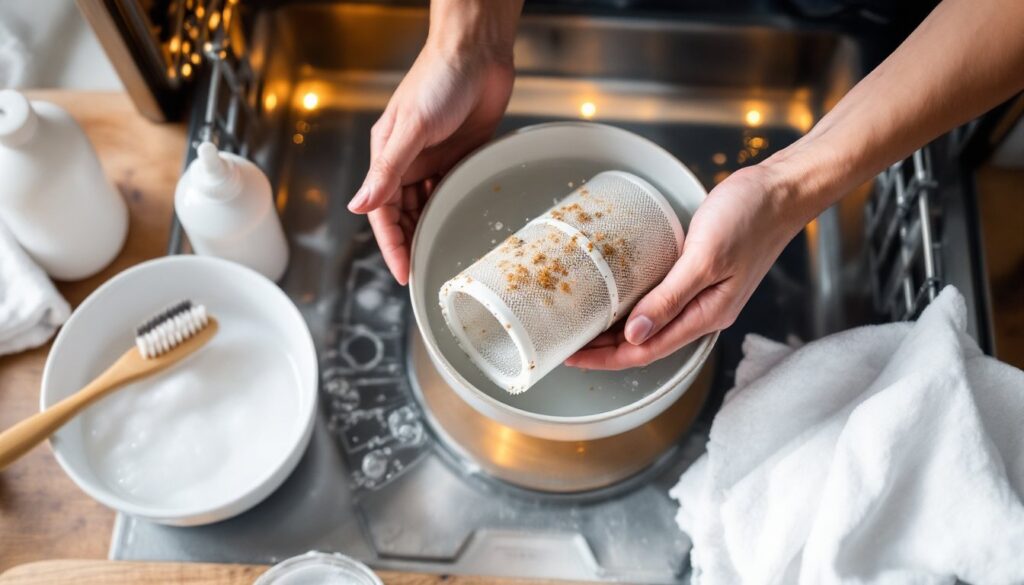
Rinse the filter under warm running water, using your soft-bristle brush or an old toothbrush to gently scrub away stuck-on debris. Work in circular motions along the mesh and cage, paying special attention to the underside where particles hide. Don’t use anything abrasive, the fine mesh can tear easily.
For stubborn buildup, soak the filter in warm water mixed with a small amount of dish soap for 5–10 minutes. This softens the grime significantly. After soaking, scrub again gently with your brush. If regular soap isn’t cutting through grease, a kitchen degreaser works effectively. Apply it sparingly, let it sit briefly, then scrub and rinse thoroughly.
Many homeowners find that cleaning a dishwasher with vinegar works remarkably well for buildup removal. Soak your filter in equal parts white vinegar and warm water for 15 minutes, then scrub. The acidity breaks down grease and mineral deposits without harsh chemicals.
Once everything looks clean, rinse under running water one more time until the water runs clear. Hold it up to light and make sure the mesh is free of debris. Shake gently to remove excess water.
How Often Should You Clean Your Filter?
The honest answer depends on your household. A family that runs the dishwasher daily with heavily soiled pots and pans needs weekly cleaning. A household running it three times a week with lightly soiled dishes might get away with every two weeks.
Here’s a practical rule: if you notice standing water at the bottom of your dishwasher, smells coming from inside, or dishes not getting as clean, don’t wait, clean the filter. Weekly cleaning should become part of your routine maintenance, similar to how you’d check your home’s maintenance checklist seasonally. Think of it like changing a coffee maker’s filter: it’s quick, it matters, and it keeps everything running right.
If you’re unsure about your machine’s cycle duration, note that how long does a dishwasher run varies by cycle. Most standard cycles take 2–4 hours, while quick wash cycles might be 20–30 minutes. A clogged filter can extend cycle times significantly, so if your dishwasher is suddenly running longer than usual, that’s another sign to clean it.
Mark it on your calendar or set a phone reminder if you tend to forget. Preventive maintenance beats emergency repairs every time.
Common Problems and Troubleshooting
Filter won’t come out: Double-check that you’ve fully released the twist-lock or clip. Some filters require a quarter-turn counterclockwise, not clockwise. If it’s truly stuck, apply a little gentle pressure while wiggling slightly, but never force it.
Cloudy or discolored filter after cleaning: Mineral buildup from hard water can leave a cloudy appearance even after scrubbing. This doesn’t affect function, but soaking in vinegar and water overnight usually clears it. If cloudiness persists, the filter may simply need replacement.
Water still pools at the bottom after cleaning the filter: The filter wasn’t your only problem. Check that the drain path underneath the filter (usually a small channel or hole) isn’t blocked separately. You may also need to clean the dishwasher’s drain line, which is a slightly more involved task. Kitchen appliance guides and reviews often cover deeper dishwasher maintenance if you need additional help.
Dishes still not clean: Sometimes the filter is clean but spray arms are clogged. Remove the top and bottom spray arms and rinse the holes with a toothpick or small brush. Food particles often clog these nozzles independently of the filter.
Foul smell even after cleaning: Run an empty dishwasher with vinegar in the bottom to sanitize interior surfaces. Combine this with your regular filter cleaning for best results. Some recommend running a hot water cycle with baking soda as well to deodorize completely.
If problems persist after filter cleaning and basic troubleshooting, your dishwasher may have deeper issues requiring professional service. Don’t assume you’ve failed, sometimes you’ve simply found the limit of what DIY maintenance can address.