



Table of Contents
ToggleNobody enjoys dealing with a slow or clogged drain, especially when it happens at the worst possible time. If you’re a Dallas homeowner looking to tackle drain cleaning yourself, you’ve come to the right place. Drain cleaning Dallas homes require isn’t necessarily complicated, in fact, many clogs respond well to simple techniques you can perform with basic tools and common household items. This guide walks you through why drain maintenance matters, how to spot problems early, and which DIY methods actually work before you decide to call in a pro. You’ll learn practical steps, honest safety tips, and realistic expectations about what you can handle solo versus when professional help makes sense.
Key Takeaways
- Drain cleaning Dallas homes require benefits from regular maintenance to prevent costly backups and foundation damage caused by hard water deposits, grease buildup, and tree roots.
- The baking soda and vinegar method effectively clears soft clogs like hair and soap scum without damaging older pipes, making it an affordable first-line DIY solution.
- A hand auger (plumbing snake) can mechanically break up stubborn blockages in sink and tub drains for $20–40, but multiple slow drains or sewage smells signal a main line issue requiring professional help.
- Professional drain cleaning in Dallas typically costs $150–$400 and uses camera inspection and high-pressure jetting to diagnose and resolve problems that DIY methods cannot fix.
- Installing mesh drain screens, avoiding grease disposal, and running hot water after showers or baths are simple prevention habits that reduce clogs and extend plumbing lifespan.
- If water pools in your yard or foundation or sewage backs up, call emergency plumbing service immediately rather than attempting DIY solutions, as these indicate serious breaks or tree root damage.
Why Regular Drain Cleaning Matters In Dallas Homes
Dallas’s mineral-heavy water and clay-based soil create unique challenges for home drainage systems. Hard water deposits, grease buildup, and tree roots seeking moisture in dry Texas summers all work against your pipes. Regular drain cleaning prevents catastrophic backups that damage drywall, flooring, and foundation concrete, repairs that cost thousands of dollars.
When you stay on top of drain maintenance, you avoid emergency calls at 11 p.m. on a Sunday. You also extend the lifespan of your plumbing, keep water flowing at proper velocity (which prevents sediment settling), and reduce the strain on your septic or municipal system. Think of it like changing your truck’s oil: a little preventive work now beats a seized engine later.
Signs Your Drains Need Cleaning Now
Don’t wait for water pooling in your shower to take action. Watch for these red flags:
• Slow drainage in sinks, tubs, or showers that doesn’t improve with plunging
• Gurgling sounds from drains or toilets (especially when washing clothes or running dishwashers)
• Foul odors coming from drains, a sign of decomposing organic matter trapped in pipes
• Water backing up into tubs when the toilet flushes, or into the kitchen sink when the washer drains
• Wet spots on foundation concrete, in the yard, or near the main cleanout, often a sign of a break deeper in the line
One slow drain might be a quick fix. Multiple slow drains in different bathrooms or kitchen usually signals a main line issue, which may require a professional. If water pools outside after heavy rain, tree roots are likely the culprit, a job for a camera inspection and professional removal.
DIY Drain Cleaning Methods That Actually Work
The Baking Soda And Vinegar Approach
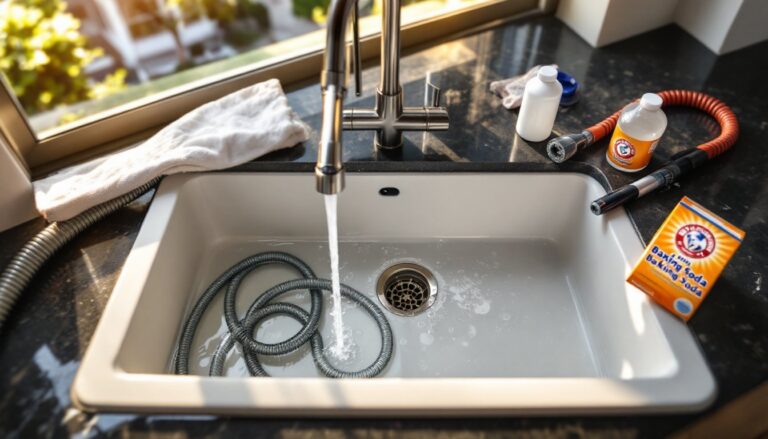
This method works best on soft clogs (hair, soap scum, minor grease) and is safe for older galvanized pipe. It’s also inexpensive: you probably already own both ingredients.
What you’ll need:
• 1 cup baking soda
• 1 cup white vinegar
• A kettle of boiling water
• A rubber stopper or plunger
• Optional: a plastic drain snake for mechanical help after chemical action
Steps:
- Remove any standing water. Use a cup to bail if needed.
- Pour the baking soda directly down the drain, filling as much of the trap as possible.
- Follow immediately with white vinegar. You’ll hear fizzing, that’s the reaction breaking down organic material.
- Plug the drain (use the stopper or stand-in with a wet rag) to keep the reaction contained in the pipe, not venting up through the overflow.
- Wait 15–30 minutes. The longer you wait, the more time the reaction has to work, but don’t let it sit overnight.
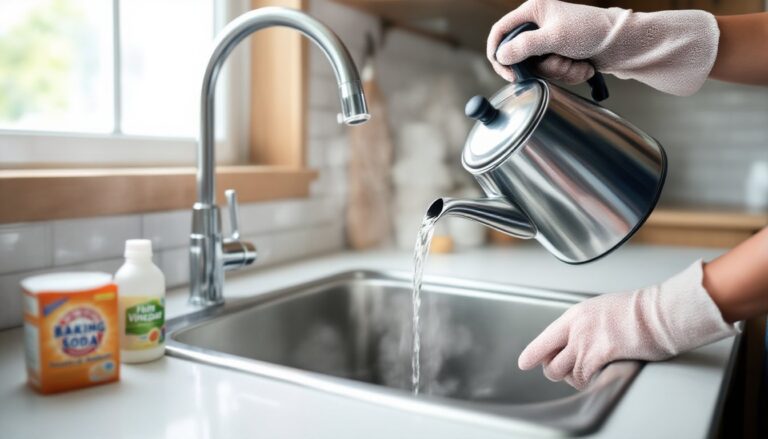
- Boil water in a kettle. Pour it slowly down the drain in two stages: half the kettle, wait 10 seconds, then the rest. The heat flushes loosened material.
For stubborn clogs, repeat once. For really stuck hair, follow the vinegar fizz with a plastic drain snake (available at any hardware store for $8–15) to mechanically break up the blockage.
Using A Plumbing Snake Or Auger
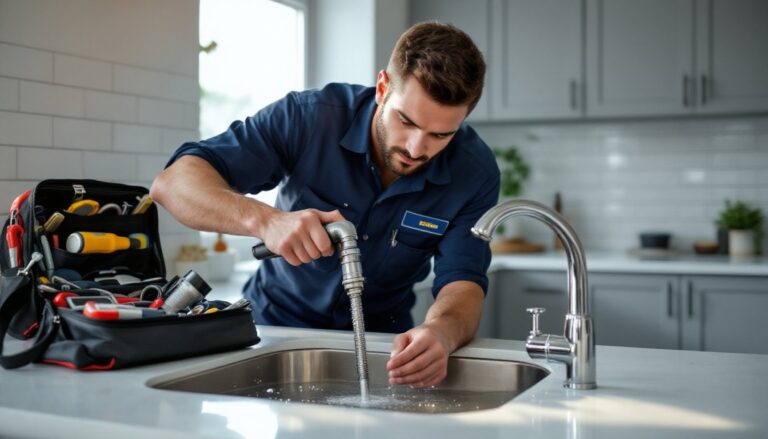
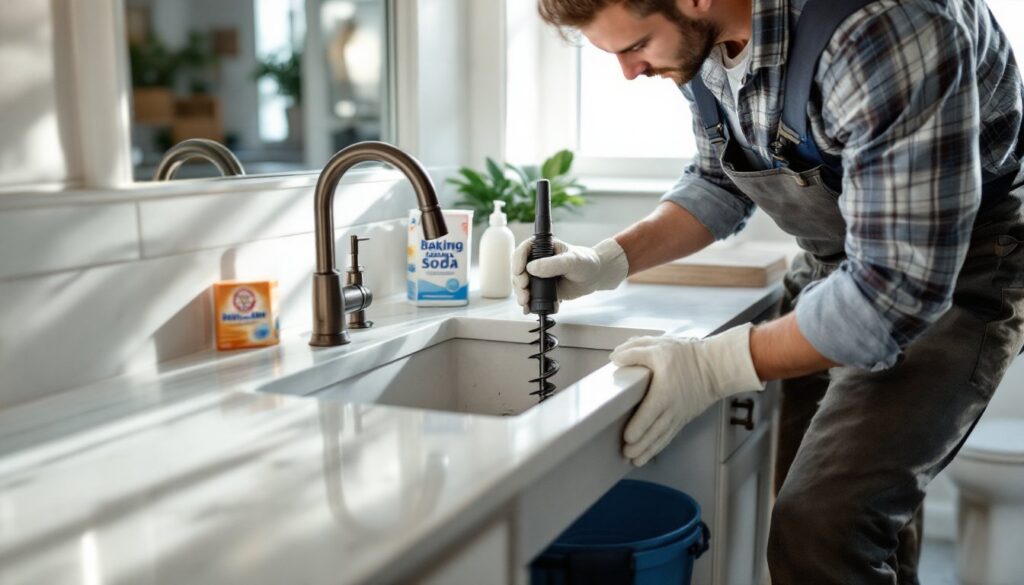
A hand auger (also called a plumbing snake) is a coiled cable with a handle and rotating head that breaks apart clogs mechanically. It’s more aggressive than baking soda but still DIY-friendly for sink and tub drains.
What you’ll need:
• A 25-foot hand auger ($20–40 from hardware stores)
• Rubber gloves and eye protection
• A bucket to catch debris
• Optional: a headlamp for visibility inside the drain
Steps:
- Remove the drain stopper or strainer if possible. If it’s stuck, skip this and work around it.
- Feed the auger cable slowly down the drain. You’ll feel resistance as you hit the clog or a bend in the pipe.
- Once you feel the resistance, rotate the handle clockwise 2–3 turns. This twists the cable head, breaking up hair and organic material.
- Pull the cable back slightly and repeat the rotation. Don’t force it, aggressive tugging can kink the cable or damage older pipe.
- When you feel less resistance and water flows, pull out the auger slowly, turning the handle gently to avoid catching on pipe edges.
- Run hot water for 20–30 seconds to flush the loosened debris.
For tub drains, you may need to remove the overflow cover (a small rectangular fitting above the water line) and insert the snake there instead, it gives you a clearer shot at hair clogs in the trap below.
Electric drain augers are available for rental at hardware stores ($30–60 per day) if your clog is deep or you’re tackling a main line, but handling one takes practice, and kickback can be dangerous. Rent one only if the hand auger doesn’t work and you’ve watched tutorial videos.
When To Call A Professional Drain Cleaner
You’ve got a solid shot at DIY success with single-drain clogs caused by hair or soap. But some situations demand professional help, and skipping it can be costly.
Call a pro if:
• Multiple drains are slow or backing up (main line issue).
• Water is pooling in the yard or foundation shows wet spots, a possible break or tree root intrusion.
• You’ve tried baking soda and a hand auger twice with no improvement.
• The drain smells like sewage backed up from the main line.
• You hear persistent gurgling or see raw sewage, stop using all water immediately and call emergency service.
• You’re unsure if the line is galvanized steel (corroded pipes can burst under pressure from a motorized auger).
Professionals use video camera inspection (feeds a tiny camera down the line to pinpoint the exact problem), motorized augers for stubborn blockages, and high-pressure jetting (blasts water at 3,000–4,000 PSI to scour the interior). The average cost for a basic drain cleaning in the Dallas area runs between $150 and $400, depending on severity and accessibility. For comparison, repairing a broken main line can exceed $5,000. Spending $300 now on a proper diagnosis and cleaning beats emergency replacement later.
Local Dallas plumbers often post transparent pricing online, no shame in getting a couple of quotes. Platforms like HomeAdvisor can help you find licensed contractors with reviews and pricing history for your area.
Preventing Future Drain Problems In Your Dallas Home
An ounce of prevention truly is worth a pound of cure when it comes to drains. Simple habits keep clogs at bay.
In bathrooms:
• Install mesh drain screens ($1–3 each) to catch hair before it reaches the pipe.
• Don’t pour grease, oils, or melted wax down drains, even liquid fat solidifies as it cools.
• Run hot water for 30 seconds after each shower or bath to flush hair and soap downstream.
• Every month, flush drains with hot water or the baking soda–vinegar method as preventive maintenance.
In the kitchen:
• Scrape plates into the trash, not the sink. Garbage disposals are not magic.
• Never pour cooking oil or grease down the drain. Let it cool, solidify, and throw it in the trash.
• Use a sink strainer basket during washing to catch food particles.
• Run cold water while the disposal is on, then hot water after, to help move solids downstream.
Outside:
• If you have trees near the main line, consider a root barrier or periodic professional cleaning. Cypress and willow roots are notorious in Dallas.
• Keep gutters and downspouts clear so water doesn’t pool near foundations and attract roots.
• Know where your main cleanout is (usually a 4-inch PVC or cast iron pipe in the front or back yard). Mark it so you can access it in an emergency.
These steps won’t guarantee you’ll never have a clog, but they’ll reduce frequency and severity. References like Bob Vila offer detailed guides on plumbing maintenance if you want to dive deeper into preventive strategies.