





Table of Contents
ToggleGutters are easy to forget about, until they’re overflowing during a downpour and water’s pooling against your foundation. If you’re a homeowner in Smyrna, Georgia, regular gutter cleaning isn’t optional: it’s maintenance that directly protects your roof, fascia, landscaping, and structural integrity. This guide walks you through why gutter cleaning matters, how to spot problems, and whether you should tackle it yourself or hire a pro. We’ll cover the tools, technique, and honest reality of this often-overlooked task so you can keep your gutters flowing and your home safe.
Key Takeaways
- Gutter cleaning in Smyrna should be performed twice yearly to prevent water damage to your roof, fascia, foundation, and structural integrity.
- Signs of clogged gutters include water spilling over edges, sagging sections, algae growth, and wet spots on the fascia—catch these issues before they become costly.
- DIY gutter cleaning requires an extension ladder, gutter scoop, work gloves, safety glasses, and proper technique; never use pressure washers, as they damage seams and force debris deeper.
- Professional gutter cleaning in Smyrna is recommended for two-story homes, steep roofs, or visible damage, with costs typically ranging from $150–$400 depending on home size.
- Seasonal maintenance in Smyrna’s humid climate includes spring inspections for winter damage, summer algae prevention, increased fall cleaning during heavy leaf drop, and winter ice-dam prevention.
- Gutter guards reduce cleaning frequency but don’t eliminate it; they cost $8–$15 per linear foot and may be worth the investment depending on your tree coverage and budget.
Why Regular Gutter Cleaning Matters for Your Home
Your gutters are your home’s first line of defense against water damage. They channel rainwater away from your roof, fascia, siding, and foundation, a critical job that breaks down the moment leaves, twigs, and debris clog the system. When gutters back up, water spills over the edges, saturating soil around your foundation and potentially causing basement leaks, foundation cracks, or settling issues down the road.
Clogged gutters also create standing water that becomes a breeding ground for mosquitoes and can damage the gutter itself through rust and corrosion. The weight of wet debris can pull gutters away from the fascia board, compromising the structural support of your roofline. In Georgia’s humid climate, this deterioration accelerates. Regular cleaning, typically twice a year, spring and fall, prevents these cascading problems and extends the life of your gutters, roof, and foundation by years.
Signs Your Smyrna Home’s Gutters Need Cleaning
Don’t wait for a storm to discover your gutters aren’t working. Watch for these red flags: water visibly spilling over the gutter edge during rain, green algae or moss growth on the gutter surface, sagging or pulling gutters, bird or pest activity around gutters, or wet spots appearing on the fascia board or soffit. You might also notice water pooling around your foundation after rainfall, or granules from your shingles accumulating in the gutter (those granules protect asphalt shingles, so their presence in gutters means wear is happening).
A simple visual inspection from the ground, looking for overflowing water, visible debris, or sagging sections, tells you a lot. If you can see daylight through the gutter from ground level, there’s likely a blockage. During the fall, when leaves drop heavily, even well-maintained gutters may need cleaning every 6-8 weeks in Smyrna. If you have trees overhanging your roof, increase frequency to three times yearly.
DIY Gutter Cleaning: Tools and Step-by-Step Instructions
Essential Tools and Safety Gear
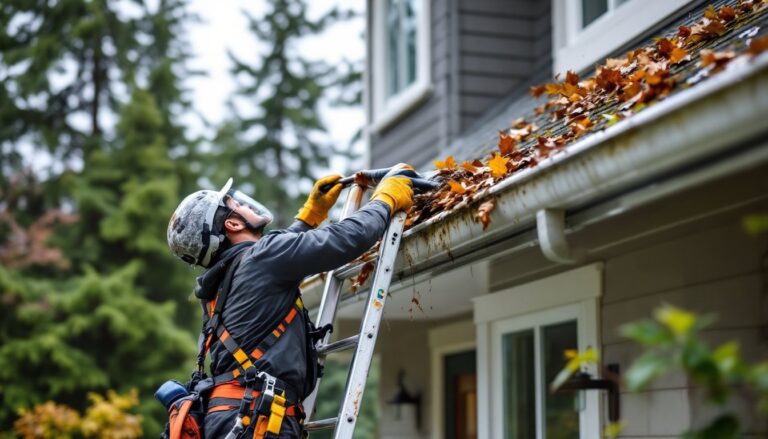
If you’re comfortable working at height, a DIY approach saves money and keeps you in control of the schedule. You’ll need a sturdy extension ladder (not a step ladder, extension ladders give better reach and stability on sloped ground), a gutter scoop or small hand shovel, work gloves (leather or nitrile to handle debris and sharp gutter edges), safety glasses, and a 5-gallon bucket clipped to the ladder rung to hold debris as you work. A wet/dry shop vacuum with a curved hose attachment speeds up cleanup, though it’s optional. Never use a pressure washer on gutters, the force damages seams and can drive debris deeper into downspouts.
Wear long sleeves to protect against cuts from corroded metal or sharp-edged debris. If you have respiratory sensitivity or are working around moldy leaves, a dust mask is wise. Set up your ladder at an angle (the base should be about 1 foot away from the house for every 4 feet of height) and never overreach, move the ladder often rather than stretching sideways. Have a second person steadying the base, especially on uneven ground typical of Georgia lots.
How to Clean Your Gutters Safely
-
Position your ladder firmly against the house, angled correctly. Check that the ground is level: if not, use a ladder leveler or relocate.
-
Start at a downspout outlet and work toward the opposite end. Begin by loosening large debris (leaves, twigs) by hand, placing it in your bucket or on a tarp below.
-
Use the gutter scoop to remove packed sediment and smaller debris from the gutter channel. Tilt the scoop slightly downward into the gutter so material falls into the bucket, not back onto your roof.
-
Check downspouts for clogs. If water doesn’t flow freely through the downspout opening, use a plumbing snake or straightened wire coat hanger to dislodge the blockage. Never force a snake, if there’s serious resistance, a clog may be deeper inside and worth a professional’s attention.
-
Rinse the gutter with a garden hose to flush out remaining sediment and test water flow. Watch to ensure water flows smoothly toward downspouts with no pooling or backing up.
-
Inspect gutter joints and seams as you work. Small leaks can be sealed with gutter sealant (silicone-based, not caulk, gutters need flexibility). Major leaks or separation mean the gutter section needs repair or replacement.
-
Empty your bucket frequently to stay safe and avoid ladder overloading. A full 5-gallon bucket weighs 40+ pounds, don’t carry it while on the ladder.
When finished, walk around your home and observe water flow from the downspouts. Water should discharge at least 4-6 feet away from the foundation. If your downspout ends right at the base of the house, extend it with a downspout extension or elbow fitting to direct water away safely.
When to Call Professional Gutter Cleaners in Smyrna
There’s no shame in hiring someone else to do this work. In fact, for two-story homes, complex roof lines, steep pitches, or if you’re uncomfortable working at height, professional gutter cleaning is the sensible choice. A professional’s liability insurance also protects you if something goes wrong: a DIY accident is on you.
You should hire a pro if you discover damaged gutters, downspout separations, missing or pulled-away sections, or signs of water damage on the fascia or soffit. Professionals have the equipment and experience to safely repair issues on the spot. Getting quotes from highly-rated local services, such as those listed on top gutter cleaning professionals in Smyrna, GA, ensures you’re working with vetted, insured contractors. Most Smyrna gutter cleaners charge $150–$400 depending on home size and debris level: requesting estimates from multiple contractors is standard practice and helps you compare pricing.
Seasonal Maintenance Tips for Smyrna Homeowners
Georgia’s four-season climate and abundant trees mean Smyrna gutters face steady seasonal stress. In spring, after winter storms and pollen season, clean gutters thoroughly and inspect for ice-dam damage or winter-weather wear. Check that downspout extensions are in place and draining at least 4-6 feet from the foundation, Smyrna’s spring rains are heavy, and poor drainage compounds foundation issues.
In summer, the focus shifts to standing water prevention. Heat and humidity make algae and moss grow fast in moist gutters: a second light cleaning mid-summer reduces this. In fall, increase cleaning frequency as leaves drop. Many Smyrna homes lose 80% of their leaves between September and November, so gutters fill quickly. Weekly inspections during peak leaf-drop can catch problems early. In winter, Smyrna rarely gets ice, but occasional freezes can create ice dams if gutters are clogged. A clear gutter with proper slope prevents ice buildup.
Consider installing gutter guards (mesh, foam, or reverse-curve covers) to reduce debris accumulation. While they don’t eliminate cleaning completely, they extend the time between cleanings. Guards cost $8–$15 per linear foot installed: budget, roof pitch, and tree density determine whether they’re worth the investment for your Smyrna home. Get an estimate using a platform like HomeAdvisor or ImproveNet to compare gutter guard options and installation costs in your area.