




Table of Contents
ToggleA slow-draining kitchen sink is one of those annoyances that catches everyone’s attention, standing water, bad smells, and the creeping dread that you’ll need to call a plumber. But here’s the thing: most kitchen drain clogs don’t require a professional visit or harsh chemicals. With the right techniques and a little patience, a homeowner can clear minor blockages, eliminate odors, and keep the drain flowing freely. This guide walks you through proven methods for cleaning your kitchen drain, from simple solutions you can try right now to more advanced approaches for stubborn clogs that won’t budge.
Key Takeaways
- Boiling water and a baking soda-vinegar solution are safe, cost-effective methods for cleaning kitchen drain clogs without harsh chemicals or professional help.
- Grease management is the most important prevention strategy—pour used grease into a container instead of down the drain to prevent 80% of kitchen clog issues.
- A hand-crank drain auger ($15–$40) is a reusable tool for stubborn blockages, but avoid liquid drain cleaners that damage pipes and create safety hazards.
- Monthly preventive maintenance using baking soda and vinegar takes 10 minutes and stops most drain problems before they become serious blockages.
- Kitchen drain issues worsen over time due to buildup of grease, food particles, and mineral deposits, making regular maintenance far cheaper than emergency plumber calls.
- If water backs up into multiple fixtures or multiple cleaning methods fail, contact a licensed plumber to address deeper blockages in the main sewer line.
Why Your Kitchen Drain Needs Regular Maintenance
Kitchen drains accumulate more than just water. Grease, food particles, soap residue, and mineral deposits build up over time, creating a perfect environment for clogs and foul odors. Unlike bathroom drains, which tend to clog from hair, kitchen drains fail because of a combination of organic matter and congealed oils that stick to the pipe walls.
Regular maintenance is far cheaper and easier than dealing with a fully blocked drain. Even if water’s moving freely now, buildup is still happening inside the pipes where you can’t see it. Left unchecked, a slow drain becomes a stopped drain, and that’s when emergency plumber fees kick in. The good news is that 15 minutes of preventive work every few weeks stops most problems before they start.
Odors are another reason to stay on top of drain cleaning. That rotten egg or garbage-like smell isn’t just unpleasant, it signals decomposing organic matter in your pipes. Clearing the drain removes the source of the smell and keeps your kitchen fresh.
Simple Methods To Clear Minor Clogs at Home
The Boiling Water Technique
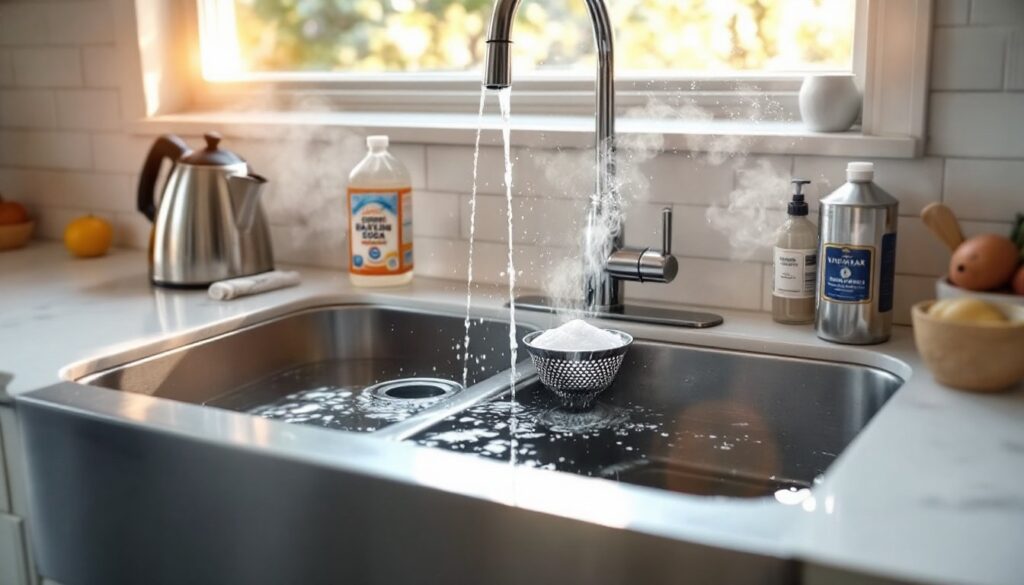
This is the first thing to try when you notice water draining slowly. Boil a kettle of water, about 2 to 3 quarts, and pour it directly down the drain in a slow, steady stream. The heat works to dissolve grease and loosen minor blockages without any chemicals or special tools.
Wait 5 to 10 minutes, then run hot (not boiling) tap water down the drain for another 30 seconds. If the water drains freely, you’re done. This method works best for grease-related clogs and is especially effective right after cooking, when grease is still somewhat liquid. For stubborn blockages, move on to the next method.
Baking Soda and Vinegar Solution
This combination creates a chemical reaction that can break apart buildup without toxic fumes. Here’s the step-by-step process:
- Remove any standing water from the sink using a cup or small bucket.
- Pour ½ cup of baking soda down the drain.
- Follow immediately with 1 cup of white vinegar. The mixture will fizz and bubble, that’s the reaction doing the work.
- Cover the drain with a plug or wet cloth to keep the reaction contained in the pipe.
- Let it sit for 15 to 30 minutes.
- Flush the drain with boiling water.
This method tackles minor clogs, reduces odors, and is completely safe for all pipe types. Baking soda is mildly abrasive and helps scrub the pipe walls while vinegar dissolves mineral deposits. If the drain still drains slowly after this treatment, repeat the process or escalate to more advanced methods.
Both of these approaches work best on minor blockages, water that drains slowly over several seconds to a minute. If water backs up completely and won’t drain at all, you’re dealing with a more serious clog.
Advanced Drain Cleaning Approaches for Stubborn Blockages
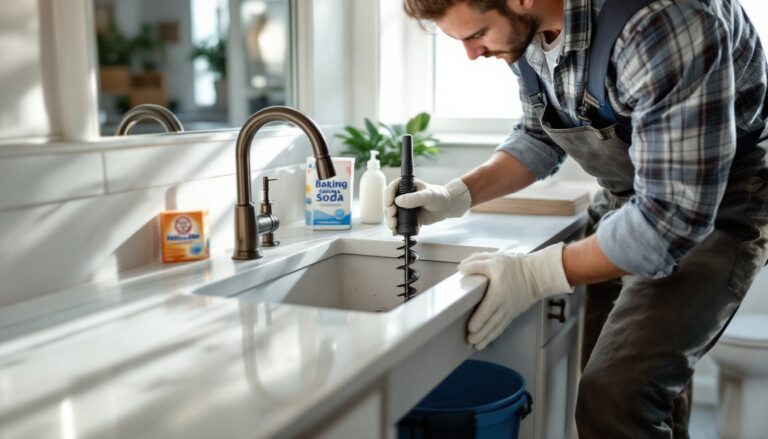
When boiling water and baking soda don’t cut it, a plumbing snake or drain auger becomes your next tool. A hand-crank drain auger, typically 15 to 25 feet long, costs $15 to $40 and is reusable for future clogs.
To use a drain auger, remove the sink strainer and feed the snake down the drain. Crank the handle slowly as you push the cable deeper. When you feel resistance (that’s the clog), crank harder and work the cable back and forth. This process breaks apart the blockage or snags debris so you can pull it back up. Run hot water down the drain afterward to flush away loosened material.
Another option is a wet/dry shop vacuum with a drain attachment. These powerful vacuums can sometimes suction out clogs directly, though they work best on debris near the drain opening rather than deep in the pipes.
For kitchen sinks with a garbage disposal, never use a snake, you risk damaging the unit. Instead, try flushing with boiling water and baking soda, or call a professional if the disposal is blocked.
Stay away from liquid drain cleaners containing sodium hydroxide or sulfuric acid. These caustic chemicals are hazardous, can damage older pipes, and are increasingly restricted in many municipalities. They also create safety risks if you need a plumber to come out, the chemicals can splash and cause serious burns. Since mechanical methods work just as well without the risk, they’re the better choice for DIYers.
If you’ve tried these methods and the drain is still blocked, or if water backs up into multiple fixtures, you likely have a blockage deeper in the drainpipe or main sewer line. That’s when you call a licensed plumber with professional-grade equipment like motorized augers or high-pressure water jets.
Preventing Future Kitchen Drain Problems
The easiest drain to unclog is one that never clogs in the first place. A few simple habits make a huge difference:
Use a sink strainer to catch food particles before they enter the drain. Empty it daily into the trash.
Scrape dishes before rinsing them. Don’t let food scraps go down the drain, they accumulate and trap grease.
Pour grease into a container (an old can, jar, or takeout container) rather than down the drain. Once it cools and solidifies, throw it away with the trash. This single habit prevents most kitchen clogs.
Run hot water for 30 seconds after washing dishes or using the disposal. This keeps oils and grease from congealing in the pipes.
Monthly maintenance flush takes 10 minutes: pour ½ cup of baking soda down the drain, chase it with 1 cup of vinegar, let it sit for 15 minutes, then flush with boiling water. This keeps buildup minimal and prevents odors.
Drains in rental properties often come with additional challenges. Older pipes, previous damage, and unknown pipe material all complicate repairs. Tenants should review lease agreements about who pays for drain cleaning and report clogs to landlords promptly rather than attempting fixes that might void agreements or cause damage. References like home rental tips and preventive care guides can help renters understand their responsibilities and rights.
Conclusion
A clogged kitchen drain doesn’t require panic or expensive professional service, not right away, anyway. Start with boiling water and baking soda, move to a drain auger if needed, and always prioritize grease management and preventive cleaning. These methods are safe, effective, and give you full control over the problem. By staying consistent with maintenance and keeping grease out of the pipes, you’ll spend far less time reaching for the plunger and more time enjoying your kitchen.