





Table of Contents
ToggleA clogged kitchen sink isn’t just an inconvenience, it’s a breeding ground for bacteria and unpleasant odors that can turn your whole kitchen sour. Whether you’re dealing with a slow drain or standing water, knowing how to clean a kitchen sink drain saves you money, prevents emergency calls to the plumber, and keeps your sink working smoothly year-round. The good news is that most drain problems don’t require expensive equipment or professional help. With the right approach and a little elbow grease, you can tackle this yourself. This guide walks you through identifying the problem, tackling it with household items, and preventing future clogs.
Key Takeaways
- Cleaning a kitchen sink drain using baking soda and vinegar is an effective, non-toxic method that works for most household clogs without expensive equipment or professional help.
- Regular drain maintenance with simple habits—such as using a drain strainer, avoiding grease, and monthly hot water flushes—prevents 90% of common kitchen sink drain problems.
- Early warning signs of a clogged drain include slow drainage, gurgling sounds, foul odors, standing water, and visible residue, so address these issues before they become major blockages.
- A standard plunger can effectively dislodge stubborn clogs caused by hair and soft materials when used with firm, consistent pressure and proper technique.
- Call a professional plumber if DIY methods fail repeatedly, water backs up from multiple drains, you detect sewage smells, or your pipes show visible damage or deterioration.
Why Regular Drain Maintenance Matters
Your kitchen sink drain works harder than you think. Every day, it processes food particles, grease, soap residue, and mineral buildup. Over time, these materials accumulate along the walls of your drain pipes, restricting water flow and creating the perfect environment for mold and bacteria to thrive.
Regular maintenance, even simple, quick cleanings, prevents small clogs from becoming expensive problems. A drain that drains slowly today might be completely blocked tomorrow, potentially backing up into your sink basin or worse, into your walls. Beyond functionality, a clean drain means no foul smells wafting up from your sink.
Think of drain maintenance like changing your car’s oil: a little preventative work now saves you from a blown engine later. The beauty is that you don’t need to be a plumber to keep your drains healthy. A few simple habits and occasional cleanings using items already in your home go a long way.
Signs Your Kitchen Sink Drain Needs Cleaning
Not sure if your drain is in trouble? Here are the telltale signs that cleaning time has arrived.
Slow draining water is usually the first red flag. If you fill your sink and it takes longer than a few seconds to drain, material has begun accumulating in the pipe. Gurgling sounds when water drains indicate trapped air pockets caused by partial blockages. Foul odors coming from the drain mean bacteria and decomposing material are building up, this is your cue to act before the smell gets worse.
Standing water that pools in the sink basin is a more serious sign: the drain is significantly restricted or fully blocked. Finally, visible residue around the drain opening or coming up through the drain itself means it’s time for immediate action.
Caught in the early stages, these problems are easy fixes. Ignored, they lead to backed-up sinks and potential water damage under your counter. If you notice any of these signs, start with the methods outlined below, they work well for minor to moderate clogs.
Quick Fixes Using Household Items
The most effective drain cleaners are often already in your kitchen pantry. Two simple, non-toxic methods can clear most household kitchen clogs without harsh chemicals or expensive tools.
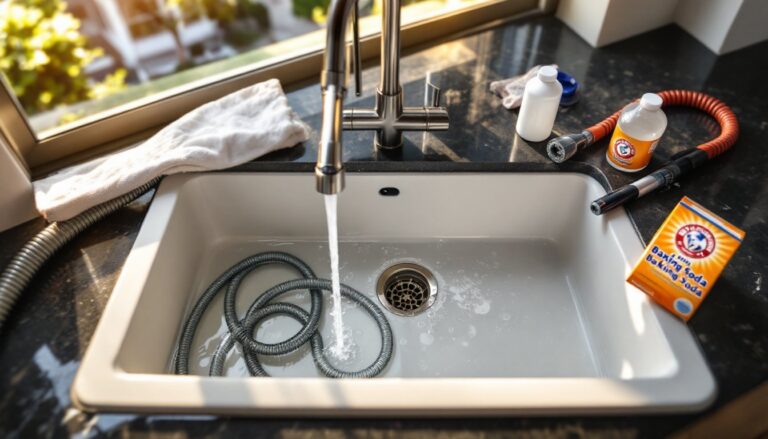
The Baking Soda And Vinegar Method
This classic combination works because of a chemical reaction that dislodges buildup. Here’s how:
- Clear the drain opening. Remove any visible hair, food debris, or gunk from the top of the drain by hand (wear disposable gloves). A small mesh strainer insert prevents future debris from going down.
- Boil water. Heat about 2 quarts of water until it’s rolling boil. Carefully pour it down the drain in one stream to flush out loose material and warm the pipe.
- Add baking soda. Pour ½ cup of baking soda directly into the drain opening. It’ll sit in the pipe.
- Follow with vinegar. Pour 1 cup of white vinegar down the drain. You’ll see fizzing, that’s the reaction working. This fizzing action breaks apart grease and mineral deposits clinging to the pipe walls.
- Let it sit. Cover the drain (use a rubber drain stopper or damp cloth) and wait 15–30 minutes while the mixture works.
- Flush with hot water. Boil another kettle and flush the drain with hot water to rinse away loosened debris.
For stubborn clogs, repeat the process. Methods using baking soda and vinegar are popular because they’re safe for all pipe materials, including older cast iron and PVC.
Using A Plunger For Stubborn Clogs
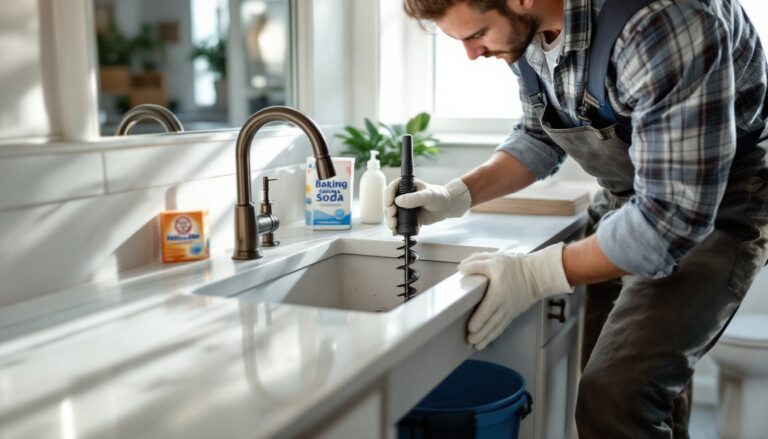
A standard cup plunger (the kind you use for toilets) works on sink drains, though you may need to modify your technique slightly:
- Fill the sink. Add enough water so the plunger cup is completely submerged.
- Block the overflow. If your sink has an overflow hole (a small opening near the rim), plug it with a wet cloth. This keeps pressure focused on the clog instead of escaping upward.
- Plunge firmly. Place the plunger cup over the drain opening and pump vigorously 15–20 times without breaking the seal. Push down and pull up with force.
- Check the result. Remove the plunger and see if water drains. If it’s still slow, repeat 2–3 times.
- Don’t give up. Sometimes it takes several rounds. The goal is to break apart or dislodge the clog so it moves down the line.
A plunger is especially useful for clogs caused by hair and soft material that baking soda and vinegar alone won’t fully clear. Step-by-step plunging techniques can handle surprisingly tough blockages when done with patience and correct pressure.
When To Call A Professional Plumber
Not every clog is a DIY job. Know the limits, attempting the wrong fix can damage pipes or make problems worse.
Call a plumber if:
- Your drain remains clogged after trying baking soda, vinegar, and plunging multiple times.
- Water backs up from multiple drains in your home (a sign the clog is in the main line, not just your sink).
- You smell sewage or see dark water backing up: this suggests a main line issue or septic problem.
- You have persistent odors even after cleaning: mold or bacteria may be entrenched deeper in the line.
- The drain line is visibly damaged, cracked, or sagging (requires inspection with a camera).
- You live in an older home with cast iron or clay pipes that may have collapsed sections.
A professional plumber has a motorized drain auger (a flexible cable with a cutting head) that can reach deeper blockages, and a camera inspection system to diagnose the exact problem without guessing. The cost is higher upfront but saves money by fixing the real issue, not just masking symptoms. If you’re unsure, calling for a quick assessment often costs $75–$150 and gives you peace of mind.
Preventative Steps To Keep Your Drain Clear
An ounce of prevention is worth a pound of cure. Simple daily habits keep your drain flowing freely:
At the sink:
- Install a drain strainer basket in the sink opening. It catches food particles, hair, and debris before they go down the pipe. Empty it after each use.
- Avoid pouring grease down the drain. Let cooking oil and bacon grease cool and solidify, then toss it in the trash. Grease is the number-one culprit in kitchen drain clogs.
- Use hot water regularly. Once a week, boil a kettle of water and pour it down the drain to flush out accumulated buildup.
- Run the garbage disposal briefly (if you have one) with cold water, then hot water, after each use to clear debris.
Monthly maintenance:
- Pour ½ cup of baking soda followed by ½ cup of vinegar down the drain once a month, even if water flows fine. Let it sit for 15 minutes, then flush with hot water. Home improvement guides recommend this as routine upkeep.
- Boil a kettle and flush the drain to clear residual buildup.
What to avoid:
- Don’t dump coffee grounds, pasta, rice, or fibrous vegetables down the drain (they expand and catch on debris).
- Never pour latex paint, adhesives, or harsh chemicals down a residential drain: they damage pipes and harm septic systems.
- Limit drain cleaner use: these caustic products corrode old pipes and are toxic to touch.
These small steps take minutes but prevent 90% of common kitchen drain problems. The goal is to catch and clear minor buildup before it becomes a major clog that demands emergency plumbing or expensive repairs.
Keep Your Kitchen Drain Running Smoothly
Cleaning a kitchen sink drain doesn’t require a plumber’s license or fancy equipment. With baking soda, vinegar, a plunger, and five minutes of your time, you can solve most clogs yourself. The real payoff comes from staying on top of maintenance, a quick monthly flush keeps your drain healthy and your kitchen smelling fresh. When a clog exceeds your skill level or household methods fail, that’s when you call the pros. Until then, grab the baking soda and get started.