





Table of Contents
ToggleAtlanta’s warm, humid climate and abundance of oak and pine trees create a perfect storm for gutter buildup. Between pollen, leaves, and pine needles, gutters fill quickly, sometimes within weeks during fall and spring. Ignoring them invites water damage, foundation problems, and pest infestations. This guide walks you through cleaning gutters in Atlanta step-by-step, with safety tips and honest advice on when to call a pro. Whether you’re tackling this yourself or planning to hire someone, understanding the process helps you stay on top of your home’s health.
Key Takeaways
- Atlanta’s humid climate and abundant oak and pine trees require seasonal gutter cleaning at minimum in late fall and early summer to prevent water damage, foundation problems, and pest infestations.
- Proper gutter cleaning in Atlanta requires essential safety equipment including a ladder, safety harness, respirator-grade mask, and work gloves to protect against falls, mold spores, and debris.
- The step-by-step gutter cleaning process involves removing packed debris, flushing the system with medium-pressure water, testing downspout flow, and checking seams for leaks—a task that typically takes 2–4 hours for single-story homes.
- Avoid common mistakes like rushing ladder setup, overfilling buckets, ignoring sagging sections, and cleaning during peak pollen season (March–May) to ensure safe and effective gutter maintenance.
- Hire a professional gutter cleaning service if your home exceeds two stories, has structural damage, deep downspout clogs, or if you’re uncomfortable on ladders, with typical Atlanta pricing ranging from $150–$300 for single-story homes.
Why Atlanta Homeowners Need Regular Gutter Cleaning
Atlanta’s subtropical climate creates unique gutter challenges. The city sits in a dense tree zone, particularly in older neighborhoods with mature oaks and pines. Heavy summer downpours and spring storms push debris-clogged gutters to the brink, and standing water becomes a breeding ground for mosquitoes and other pests.
Clogged gutters don’t just overflow prettily, they cause real damage. Water backing up under your fascia rots wood, compromises attic insulation, and eventually weakens foundation footings. In Atlanta’s clay-heavy soil, water pooling near foundations creates hydrostatic pressure that cracks basement walls. Most homeowners don’t notice until interior damage appears.
Atlanta’s humidity also accelerates mold growth in gutters and downspouts. Seasonal cleaning, at minimum in late fall and early summer, prevents these headaches. If your property borders wooded areas, you may need quarterly cleanings.
Essential Tools And Safety Equipment You’ll Need
Gutter cleaning isn’t complicated, but using the wrong tools invites injuries. Here’s what you need:
Tools:
• Ladder (a 24-foot extension ladder covers most single-story homes: rent if you don’t own one)
• Gutter scoop or small shovel (removes packed leaves and sediment)
• Garden hose with a trigger nozzle (flushes debris and tests water flow)
• Bucket (for hauling debris down instead of dropping it)
• Putty knife or flat scraper (for stubborn buildup)
• Work gloves (leather or reinforced fabric, not thin cloth)
• Safety harness (recommended for second-story gutters: non-negotiable for steep roofs)
Safety Equipment:
• Safety glasses or face shield (debris flies during flushing)
• Dust mask or respirator (mold spores and bacteria colonize gutters, especially in Atlanta humidity)
• Ear protection (helpful if using powered washers)
• Closed-toe boots with good grip
Don’t skip the harness for second-story work. Falls from ladders are the leading cause of accidental home deaths. Rent a harness system from your local equipment rental shop (usually $15–$25 per day). Your life is worth it.
Step-By-Step Guide To Cleaning Your Gutters
Preparation And Safety Setup
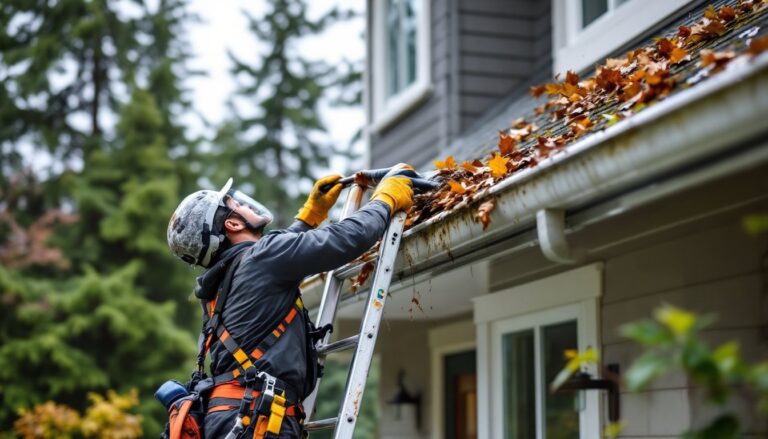
Start on a calm, dry day, wind creates ladder instability, and wet leaves are slippery. Set up on level ground and position your ladder to avoid power lines. If lines run near your gutter, call a professional or have the utility company de-energize them.
Put on all safety gear before climbing: glasses, mask, gloves, and harness. Set your bucket near the ladder base. Before ascending, test the ladder with your weight at ground level, it should feel rock-solid.
Inspect gutters from the ground first. Look for obvious damage: separated sections, large holes, or sagging sections. These need repair before cleaning and may require professional help.
Removing Debris And Flushing The System
-
Start at the high end of a downspout-adjacent section. Gutters slope toward downspouts, so work from the high point down. This keeps debris moving toward the outlet.
-
Scoop out packed debris. Use your gutter scoop or small shovel to lift leaves, sediment, and twigs. Work slowly, don’t rush and lose your footing. Drop debris into the bucket, not onto the ground (neighbors appreciate this, and you avoid the mess).
-
Flush the gutter. Once debris is removed, use your hose with a trigger nozzle to flush the entire section. Start at the high end and work toward the downspout. Water should flow freely. If it pools anywhere, you have a sag that may need shimming or sectional replacement.
-
Test downspout flow. Flush water into each downspout opening. If water backs up, the downspout is clogged. Use a plumbing snake or pressure washer to clear it. In Atlanta, gutter cleaning services often handle this as part of a professional service, but DIYers can rent a snake from a hardware store.
-
Check for leaks at seams. As water flows, watch for leaks at gutter joints and seams. Small drips may seal themselves once gutters aren’t clogged, but persistent leaks need sealant or sectional replacement.
-
Work your way around the house. Move your ladder methodically, section by section. Never reach or lean: instead, reposition the ladder. Overextending causes falls.
The entire process typically takes 2–4 hours for a single-story home, depending on debris load and gutter accessibility. Plan for a full afternoon.
Common Mistakes To Avoid During Gutter Cleaning
Skipping the mask. Atlanta’s humidity breeds mold and bacteria in gutters. Inhaling spores triggers respiratory issues. Wear a respirator-grade mask (not just surgical cloth) or a properly fitted N95, especially in warm months.
Rushing the ladder setup. Uneven ground causes tipping. Always use a level base and have a spotter hold the ladder from below. Never lean sideways more than arm’s length from the ladder rails.
Overfilling your bucket. A five-gallon bucket of wet leaves weighs 40+ pounds. Overloading strains your arms and destabilizes the ladder. Half-fill instead and make extra trips.
Ignoring sagging sections. If a gutter sags noticeably or separates from the fascia, it won’t drain properly no matter how clean it is. Get a contractor’s estimate before spending time on maintenance cleaning. HomeAdvisor and Angi offer cost estimates from local Atlanta contractors for reference.
Using the wrong nozzle pressure. A blast of water can dislodge gutters from their hangers or separate seams. Use a trigger nozzle set to medium pressure, not a concentrated jet.
Cleaning gutters in peak pollen season (March–May). Pollen counts in Atlanta during spring are brutal, and you’ll be breathing it while working overhead. Wait until late May or early summer after pollen season wanes.
Neglecting downspout extensions. Many Atlanta homes lack proper downspout discharge. Water should drain at least 4–6 feet away from the foundation. If your downspout empties near the foundation, add an extension or splash block.
When To Call A Professional In Atlanta
Gutter cleaning is DIY-able, but some situations demand professional help.
Call a pro if:
• Your home is taller than two stories or has a steep roof pitch (>8:12). Tall, steep work requires licensed crews with insurance.
• You have structural damage: separated sections, large holes, or sagging gutters beyond shimming. Repairs require precise measurements and proper fastening.
• Downspouts are clogged deep in the foundation wall or underground. Professionals have video inspection tools and powered snakes.
• You’re uncomfortable on ladders or have mobility issues. No project is worth a fall.
• Gutters house active wasp or hornet nests. Call a pest control service first, then a gutter cleaner once nests are gone.
Atlanta has competitive gutter cleaning pricing, typically $150–$300 for a single-story home depending on debris load. Today’s Homeowner offers seasonal maintenance checklists that remind homeowners when professional cleanings are due. Many contractors offer annual maintenance plans cheaper than one-off cleanings.
If you do hire someone, ask for references and verify they carry general liability insurance. A legitimate outfit won’t balk at this, it protects you both.