







Maximalist design is like a party for your home—lively, vibrant, and unapologetically bold. Gone are the days of minimalism where less was more; now it’s all about more being more. Picture a space bursting with colors, patterns, and textures that make you feel like you’ve stepped into a whimsical wonderland. It’s not just decor; it’s a lifestyle choice that says, “I love chaos and I embrace it!”
What Is Maximalist Design and Decor?
Maximalist design refers to an approach in home decor that celebrates abundance and individuality. It embraces vibrant colors, intricate patterns, and varied textures, resulting in a lively atmosphere. This style invites an exuberant expression of personality, rejecting the notion of less is more. Instead, maximalism champions the idea that more can indeed be more.
Furniture pieces often exhibit bold designs and can be adorned with diverse accessories, including art, plants, and textiles. Various elements combine harmoniously to create layers of interest and visual stimulation. The layering of colors and textures generates depth within a space while allowing personal stories to unfold.
Artwork plays a significant role in maximalist decor. Large canvases with striking visuals often take center stage, reflecting the owner’s taste and interests. Collections of decorative objects, ranging from vintage finds to modern sculptures, add personality and charm.
Lighting fixtures tend to be statement pieces, varying from oversized chandeliers to eclectic lamps. These illuminate spaces while enhancing the overall aesthetic, drawing attention to the rich details of the decor. Fabrics also contribute, with bold prints on curtains, upholstery, and throw pillows fostering an inviting and eclectic environment.
Eclecticism reigns supreme in maximalist design. Mixing styles, eras, and cultures becomes an art form, giving every room a unique character. This approach encourages experimentation, allowing individuals to create spaces that resonate with their lifestyle and experiences.
Overall, maximalist design embodies a spirit of creativity and individuality. Each element interacts, telling a story that celebrates the beauty of abundance.
Key Characteristics of Maximalist Design
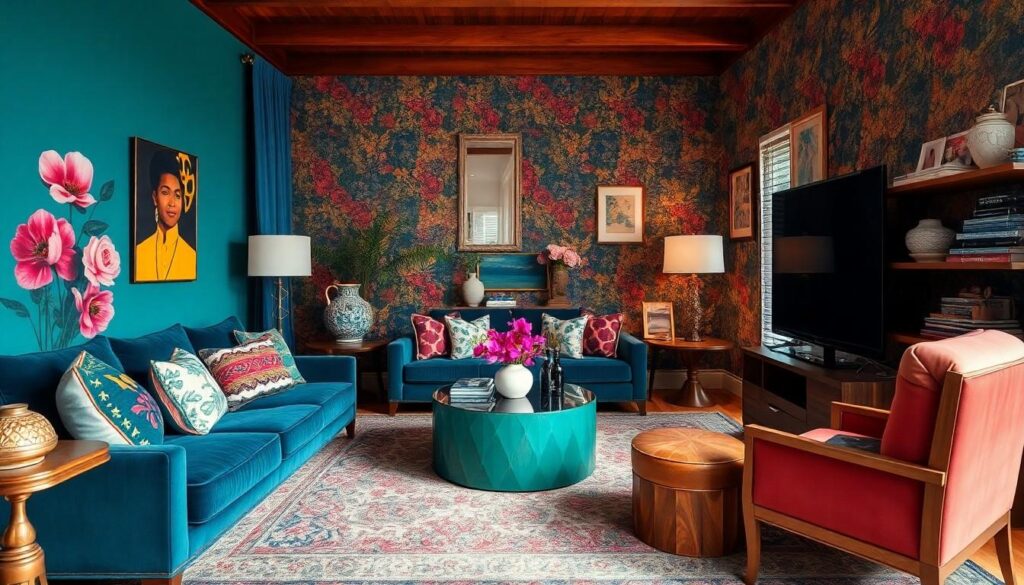
Maximalist design is defined by its embrace of bold elements and a captivating mix of styles. Each component contributes to a vibrant and energetic atmosphere.
Colors and Patterns
Vibrant colors dominate maximalist design, often featuring rich jewel tones and bright hues. Patterns clash and complement, with florals, geometric shapes, and abstract designs intermingling. Layers of color create visual excitement, drawing attention to diverse areas within a space. Each room potentiates a unique story through the thoughtful selection of wallpapers, textiles, and furnishings. Eclectic combinations, like pairing polka dots with stripes, showcase creativity and individuality in a way that minimalism typically avoids.
Textures and Materials
Textures play a crucial role in maximalist design, inviting tactile experiences through various surfaces. Mixing fabrics, such as velvet, silk, and linen, enhances the richness of a room. Natural materials, including wood, metal, and stone, blend seamlessly with synthetic options, creating balance and interest. Decorative items, from plush cushions to ceramic vases, add layers and depth. Interestingly, the contrast of rough and smooth textures draws the eye, encouraging interaction with the decor. Each choice amplifies the overall aesthetic, contributing to a multi-dimensional space that invites exploration.
How to Incorporate Maximalist Design in Your Home
Incorporating maximalist design in a home requires thoughtful choices in furniture, accessories, and decor items to create a cohesive yet vibrant environment.
Choosing the Right Furniture
Select bold furniture pieces that stand out and define a room. Opt for eclectic shapes, such as oversized sofas or sculptural chairs, that serve as focal points. Bright colors and unique patterns enhance visual interest, while plush textures invite comfort. Mix styles, blending vintage finds with modern designs to reflect personal taste. A statement coffee table or a colorful side chair can anchor a space while adding character. Consider functional pieces that offer storage without sacrificing style, allowing for a clutter-free yet expressive environment.
Layering Accessories and Decor Items
Layer accessories to achieve depth and complexity in a space. Start with a mix of art, textiles, and decorative objects that resonate with personal experiences. Using various textures, such as a wool throw, silk cushions, or ceramic vases, adds tactile appeal. Group items in odd numbers for balance and visual harmony. Incorporate plants for a touch of nature and life, enhancing the overall aesthetic. Incorporate bold, colorful artwork or large statement pieces that echo personal aesthetics and energize the room. Arrange collections of items, like books or travel souvenirs, to tell a story and invite exploration.
Benefits of Maximalist Design and Decor
Maximalist design offers an opportunity for personal expression in home decor. It embraces individuality by allowing the incorporation of vibrant colors, bold patterns, and diverse textures. This approach can transform spaces into lively environments that reflect unique tastes.
Creativity flourishes within maximalism, as it invites layering of multiple elements, creating depth and complexity. Bold furniture pieces serve as focal points, while accessories and artwork contribute to visual interest. Each item adds to the narrative of the space, enhancing its character.
Eclecticism thrives, allowing combinations of different styles and eras. Mixing cultural influences fosters a personalized atmosphere that can evoke memories and stories. It enables individuals to celebrate their backgrounds and experiences through curated decor.
Sensation plays a vital role, as textures create tactile experiences. The combination of smooth, rough, soft, and hard materials engages the senses and encourages interaction with the surroundings. This dynamic environment promotes exploration and discovery.
Comfort often accompanies maximalist spaces, where abundance invites relaxation. Cozy elements, such as plush textiles and inviting seating arrangements, enhance the enjoyment of living within the decor. In these environments, individuals can feel at ease while surrounded by beauty.
The aesthetic joy of maximalist design can elevate moods. Enveloping colors and patterns can positively influence emotions and foster creativity. Inviting more joy and energy into spaces encourages a vibrant lifestyle that resonates with those who dwell there.
Common Misconceptions About Maximalism
Maximalism is often misunderstood as chaotic or cluttered. In reality, it emphasizes intentional layering and thoughtful arrangement of decor elements. Many believe that maximalist design lacks a coherent vision, yet it thrives on curated collections that tell a story.
Another common misconception is that maximalism only involves bright colors and patterns. While vibrant hues play a significant role, neutral tones can also balance the overall aesthetic. Individuals might think maximalist spaces become overwhelming, but when designed mindfully, they foster a warm and inviting atmosphere.
Some assume that maximalism eliminates minimalism’s functionality. However, it includes practical design elements that serve a purpose while enhancing visual appeal. Critics often claim that maximalism is too extravagant for everyday living. In contrast, many find that incorporating maximalist elements creates cozy, personalized sanctuaries.
Another belief is that maximalism demands a large space. Smaller areas can embrace this style too, using strategic arrangements and layered decor to optimize impact. People may think that maximalist design only suits specific decor styles. Instead, it works harmoniously across various aesthetics, blending traditional, modern, or eclectic influences.
It’s common to believe that maximalism is solely about consumerism. This perspective overlooks its potential for recycling, repurposing, and valuing meaningful objects. Emphasizing a personal connection to items enhances the overall experience. Maximalism invites openness to expression while allowing for individual storytelling and creativity.
Maximalist design is more than just a decorating style; it’s a celebration of individuality and creativity. By embracing bold colors, diverse textures, and eclectic elements, it transforms spaces into vibrant reflections of personal taste. This approach invites exploration and interaction, making each room a unique story waiting to be discovered.
The intentional layering of decor not only enhances visual appeal but also fosters a sense of comfort and joy. Maximalism encourages individuals to break free from conventional design norms, allowing them to express their personalities in captivating ways. With its rich tapestry of styles and influences, maximalist design truly stands as a testament to the beauty of abundance and creativity in the home.